
About the Department
Being one of the oldest branches of engineering, Civil engineering makes the society more sophisticated and provides comfort to the people. The Civil Engineering Department of RIT was established in the year 2010 with an intake of 60 students which increased to 120 students in the year 2014. The Department offers an undergraduate program in Civil engineering. It has well equipped laboratories with sophisticated and state of the art instruments and facilities. With highly qualified faculty and dedicated technical staff the department provides an ideal environment for academic pursuits.
The department also undertakes many consultancy projects from industry and other organizations in the field of concrete technology, soil mechanics and environmental engineering. The vision of the department is to effectively train our students as Civil Engineers who can serve the society competently, collaboratively and ethically
HOD’s Message
Message from the Desk
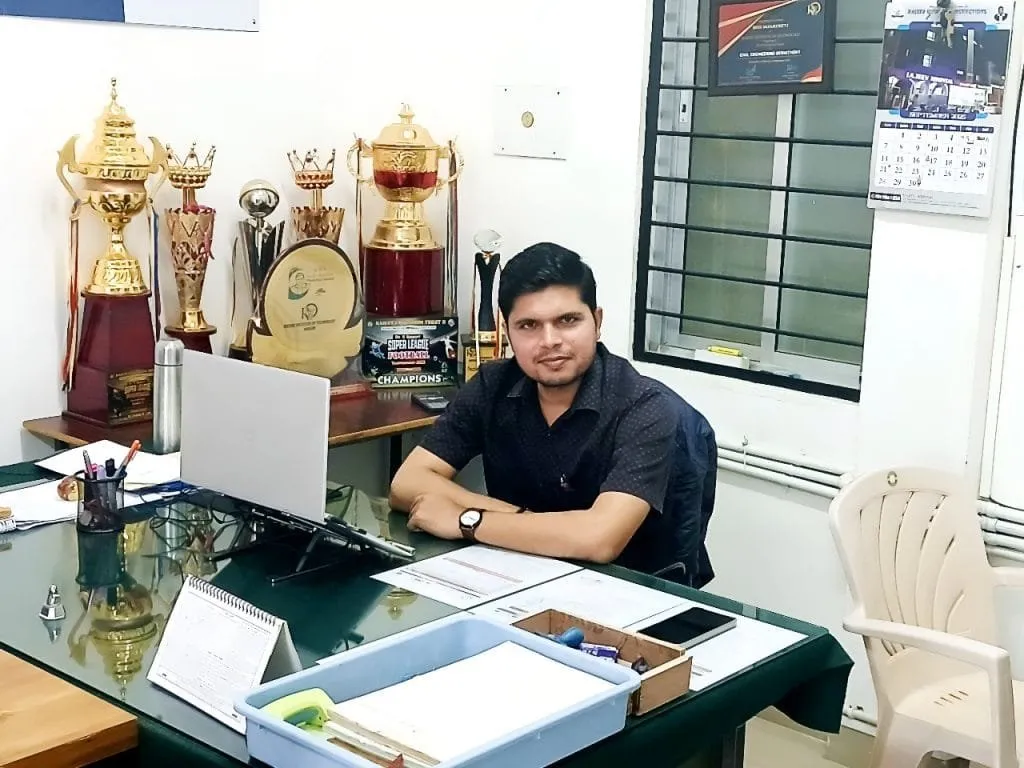
Dr. Gopal B Bekkeri
Head of the Department
“Civil Engineering is not just about building structures—it is about shaping the very foundation of society. It is one of the oldest and most versatile branches of engineering, constantly evolving to meet modern challenges with creativity, innovation, and sustainability. From smart infrastructure to environmental conservation, the scope of Civil Engineering today is vast and inspiring.
At RIT, Hassan, our Department of Civil Engineering stands as a center of excellence with a proud legacy of achievements. Our students have consistently secured University Ranks, Gold Medals, and brought laurels in sports and cultural events, reflecting their all-round development and commitment to excellence.
We are guided by a team of highly experienced and dedicated faculty members, supported by skilled technical staff and state-of-the-art laboratories that create an ideal environment for learning and research. The department offers a dynamic and industry-oriented curriculum, integrating field training, hands-on workshops, industrial visits, and modern software tools to bridge the gap between theory and practice.
Our focus extends beyond academics—we nurture leadership qualities, professional ethics, and a spirit of innovation in every student. Through continuous mentoring, technical activities, and industry collaborations, we prepare our graduates to be future-ready professionals contributing to sustainable and resilient infrastructure development.
As the Head of the Department, I am immensely proud to lead this vibrant and accomplished team. I warmly welcome all young aspirants to join us, explore their potential, and become part of our journey towards engineering a better tomorrow.”
Vision of the Department
- To be an Excellent Centre that creates socially and ethically responsible Civil Engineers by providing quality technical education with an emphasis on sustainable development.
Mission of the Department
- To strengthen the skills of the students by providing training in the emerging areas of Civil Engineering.
- To infuse ethical responsibility, environmental awareness and leadership qualities to meet societal needs.
- To enhance the knowledge of the students through interactions with industry professionals.
Program Educational Objectives (PEOS)
- Gain in depth knowledge of Civil Engineering subjects to address practical challenges using modern tools and techniques.
- Pursue higher education and show professional excellence.
- Exhibit professionalism, ethical approach, communication skills, team work in their profession and adapt to modern trends by engaging in lifelong learning.
PROGRAM OUTCOMES
Engineering Graduates will be able to:
- Engineering knowledge: Apply the knowledge of mathematics, science, engineering fundamentals, and an engineering specialization to the solution of complex engineering problems.
- Problem analysis: Identify, formulate, review research literature, and analyze complex engineering problems reaching substantiated conclusions using first principles of mathematics, natural sciences, and engineering sciences.
- Design/development of solutions: Design solutions for complex engineering problems and design system components or processes that meet the specified needs with appropriate consideration for the public health and safety, and the cultural, societal, and environmental considerations.
- Conduct investigations of complex problems: Use research-based knowledge and research methods including design of experiments, analysis and interpretation of data, and synthesis of the information to provide valid conclusions.
- Modern tool usage: Create, select, and apply appropriate techniques, resources, and modern engineering and IT tools including prediction and modelling to complex engineering activities with an understanding of the limitations.
- The engineer and society: Apply reasoning informed by the contextual knowledge to assess societal, health, safety, legal and cultural issues and the consequent responsibilities relevant to the professional engineering practice.
- Environment and sustainability: Understand the impact of the professional engineering solutions in societal and environmental contexts, and demonstrate the knowledge of, and need for sustainable development.
- Ethics: Apply ethical principles and commit to professional ethics and responsibilities and norms of the engineering practice.
- Individual and team work: Function effectively as an individual, and as a member or leader in diverse teams, and in multidisciplinary settings.
- Communication: Communicate effectively on complex engineering activities with the engineering community and with society at large, such as, being able to comprehend and write effective reports and design documentation, make effective presentations, and give and receive clear instructions.
- Project management and finance: Demonstrate knowledge and understanding of the engineering and management principles and apply these to one’s own work, as a member and leader in a team, to manage projects and in multidisciplinary environments.
- Life-long learning: Recognize the need for, and have the preparation and ability to engage in independent and life-long learning in the broadest context of technological change.
PROGRAM SPECIFIC OUTCOMES
After completion of program, students will be able to
- Create Civil Engineering structures by planning, analysis and design without over exploitation of natural resources.
- Carry out experiments/field investigations and interpret the results in order to provide solutions to real world Civil Engineering problems.